

Have you ever had a friend at work become your manager?
Or perhaps you were promoted and began managing one of your friends?
Back when I was a UX Designer, my closest friend became my manager.
Over time, we both quietly began to worry about how the new dynamic would impact our friendship - the stakes were higher now.
At some point, we decided to sit down and answer the question: What matters most to us about how we work together?
- We grouped the themes
- Created a list of shared values
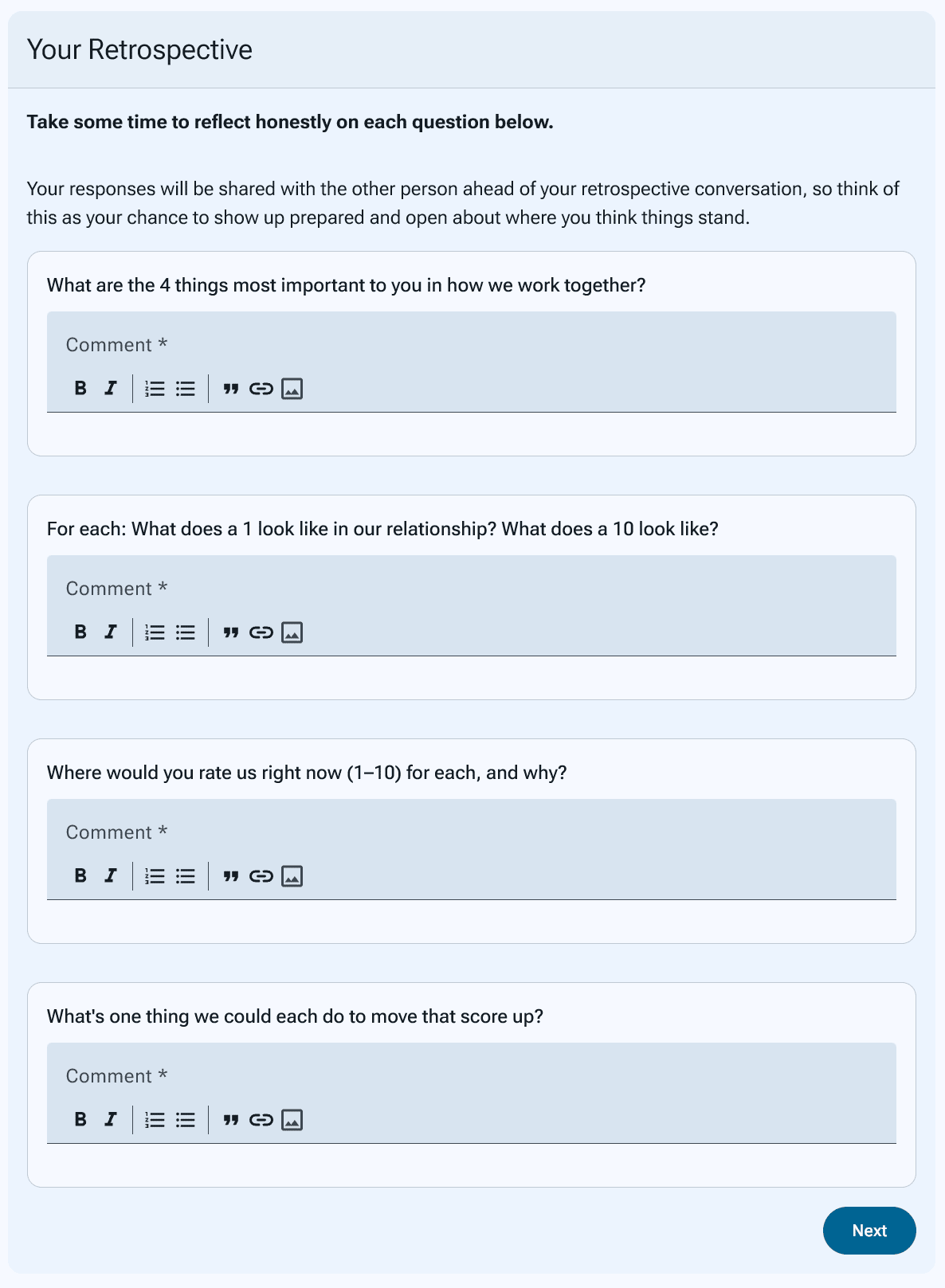
- Defined what a 1 and a 10 looked like for each
To give an example, one of our values was 'Challenging Each Other', and here were our definitions for a 1 & 10:
1 - We don't challenge, or we challenge too much, aggressively
10 - We gently challenge at the appropriate time.
Then, every 3 months, we held a meeting to review our scores, discuss our reasons for them, and agree on actions to increase or maintain them.
It was one of the most powerful performance practices we’d both ever experienced.
Create a dedicated space for feedback
The most powerful part of this activity was that it made us both accountable for creating a working relationship that enabled us to perform at our best.
There were no surprise attacks masked as feedback.
No off-the-cuff criticisms that come when someone bottles something up.
Instead, we scheduled time for a mutual discussion that let us focus on shared behaviours and team dynamics, and on how they enable or hinder performance.
We were able to celebrate what was working well, name tensions, and identify solutions together. It stopped us both from making assumptions, filling in the gaps with our own stories, or letting issues slide.
I remember one retrospective in particular.
I was concerned that my manager wasn’t being entirely honest about whether I was meeting his expectations. We had a particular value about sharing responsibility for performance, and where I rated it a 4, he rated it a 7.5.
The conversation that followed helped me learn that the stress I was picking up on wasn’t about me, but rather about the broader team.
We left the discussion with concrete actions to improve how the wider team functioned.
Looking back, the retrospective didn’t just help us manage performance. It protected the thing we were both worried about losing in the first place: our trust.
The power of retrospectives is in improving the relationships that make great work possible
If a team doesn't dedicate time in their week or month to discuss what it's like to work in the team and on the work, performance begins to wane, and frustration grows.
Suddenly, performance conversations feel reactive rather than developmental, and managers get stuck "managing performance" instead of empowering teams.
So often, I see HR teams implement lengthy performance review processes that happen once or twice a year and roll out feedback tools that let individuals ask their peers for feedback via a form.
High-performing teams don’t wait for annual reviews to talk about performance.
They build small, regular moments where people can safely say what’s working and what isn’t, and how to improve their ways of working. They discuss whether they:
- Have the capabilities the team needs to perform their job well
- Behave with each other in ways that bring out the best in each other
- Are achieving both individual and team goals and objectives.
In my experience, the best way to improve team performance is to start with two-way conversations between managers and team members about how work is going and what each person needs to do their best.
Once people feel safe discussing their experiences in one-to-one conversations, managers can bring those discussions into the team setting. Retrospectives then shift the conversation from individual relationships to how the team works together, helping everyone take shared responsibility for improving both the team’s environment and its performance.
How to use Crewmojo to enable retrospectives
One of the biggest benefits I believe Crewmojo provides is the ability to create custom workflows.
Mark and I have put together a short video showing how you could enable managers to hold a retrospective when they transition from a peer to a manager via Crewmojo. Here are the steps involved:
Step 1: Set up a trigger for when a manager is promoted and is managing people who were previously peers.
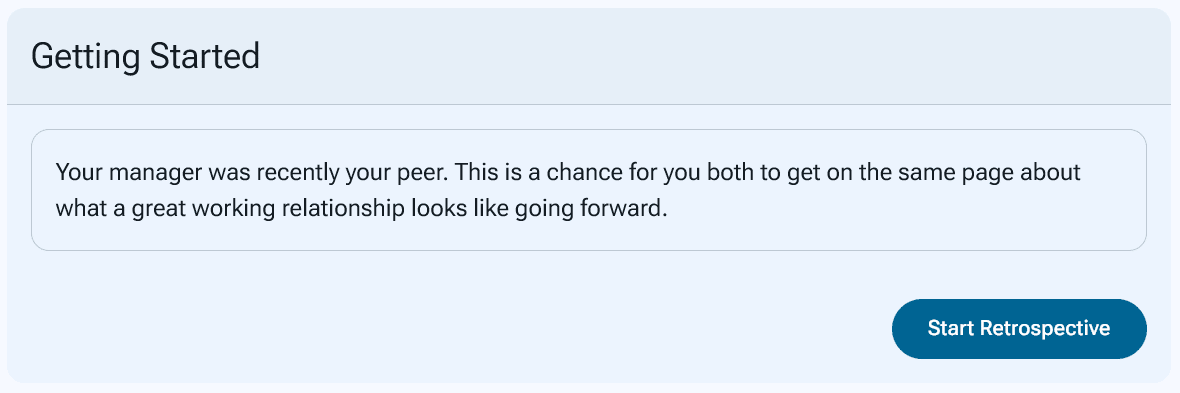
Step 2: Send a retrospective form to the manager and employee to complete. Include questions to help them reflect on what matters in their working relationship, what is working well, and what could be improved.
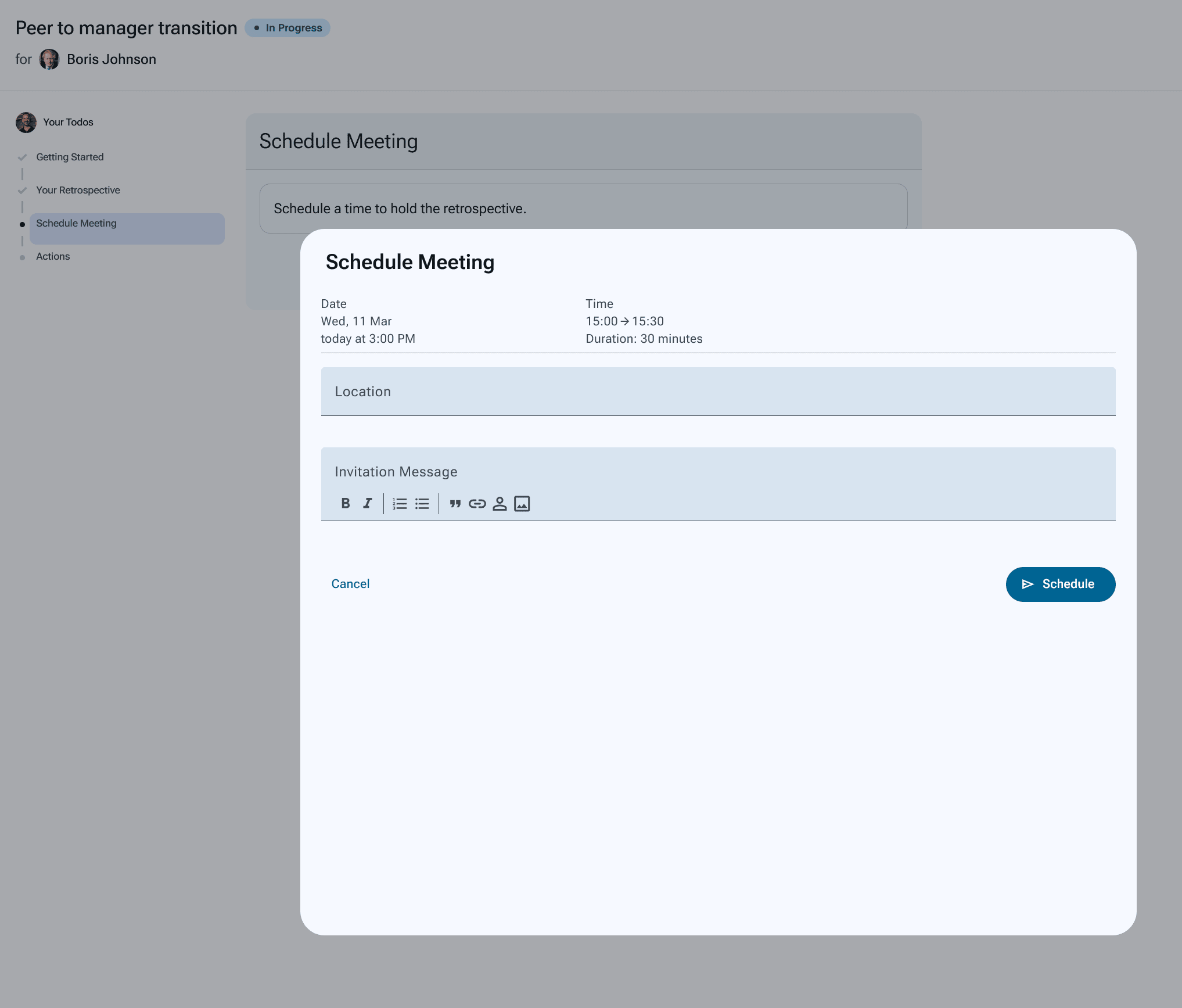
Step 3: Provide the manager with a task to schedule a retrospective meeting to discuss each of their responses. This could be anywhere from 30 minutes to 90 minutes by default.
Step 4: Set up a task for managers to note any actions from the meetings and create a template for a finalised view of the outputs

Accountability for performance starts with conversations
Retrospectives are one of my favourite tools for building collective accountability for a team’s performance.
When done well, they help a team to co-create the conditions they need to succeed.
If you want to build high-performing teams, start by giving your leaders a structure for discussing their experience of work and how it's impacting their team members' ability to do their best work.
Why not test one out with your own team and see how it goes?